
Why Professional Clubs Require Full Match Footage & Performance Data
- Ian McClurg - MSc Performance Coaching

- Sep 9, 2025
- 2 min read
Updated: Sep 10, 2025
For international players aged 16–19 applying for formal trials, professional soccer clubs require
both full match footage and detailed performance data. This ensures clubs make informed
decisions before committing valuable time and resources to bringing a player in.
Players and their families are always keen to secure training and formal trials opportunities at professional clubs. However, very few players prepare adequately so that they are unable to demonstrate to professional clubs their full potential.
The gap in performance levels between international players (in part-time training environments) and academy players at professional clubs training 12-16 hours/week is large. Therefore, international players must complete rigorous training (technically and physically) prior to travelling across.
We provide players with access to the daily fitness program of a professional club in the UK and will soon be providing additional support from a technical coach at Wolves FC in the EPL and a fitness coach who used to work at the club.
Moving forward, we will be making it compulsory that all players that we place in professional clubs for training or formal trials are completing intensive training plans (via our App) for 2-4 months.
We will also be requiring that players are utilizing the technology of our official data partner TARGET FOOTBALL to track training and match performance data - ORDER NOW.
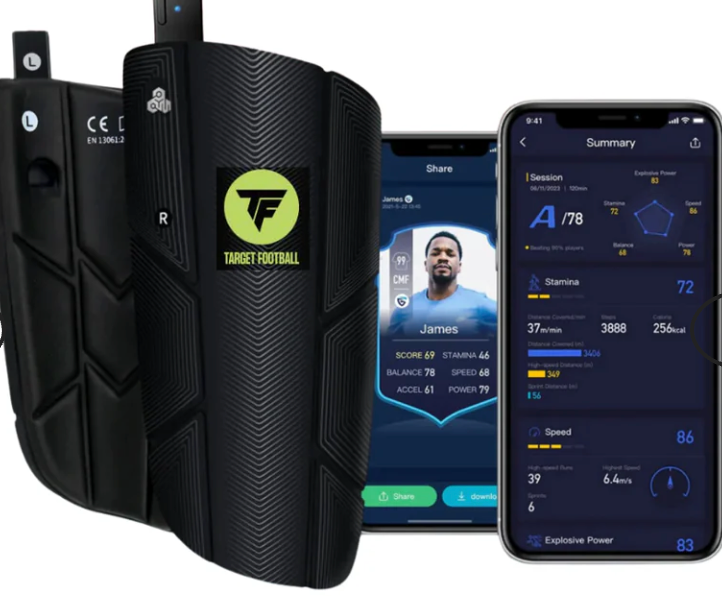
Here are the reasons why professional clubs require full-match footage and performance data from international players:
1. Match Context Matters More than Highlights
Clubs need to see how a player performs across 90 minutes, not just a few highlight clips. Full match footage allows scouts and coaches to evaluate:
Consistency: Does the player sustain intensity or fade after 20–30 minutes?
Decision-Making: Choices made under pressure, not just successful actions.
Off-the-Ball Movement: Positioning, pressing, tracking, recovery runs.
Game Intelligence: How the player reads play, anticipates transitions, and adapts to different phases of the match.
2. Performance Data Provides Objective Comparison
Clubs receive hundreds of international applications every year. Raw performance data helps filter players and compare them against academy benchmarks:
Physical Metrics: Sprint speed, total distance, high-speed running, agility, endurance (e.g., GPS data or beep test scores).
Technical Data: Passing accuracy, dribbling success rate, duels won, shots on target.
Consistency Over Time: Average values across multiple matches rather than one-off performances.
Without data, clubs rely only on subjective judgment, which increases the risk of wasting time on unsuitable players.
3. Mitigating the Risk of International Recruitment
Flying in a player from abroad for a trial is costly in terms of time, logistics, and resources. Clubs want as much certainty as possible that the player can match academy standards before committing:
Full video reduces the chance that highlights hide weaknesses.
Data evidence demonstrates the player’s level against benchmarks for their age group.
Together, they reassure the club that the player is worth the investment of a formal trial.
4. Aligning with Academy & First-Team Standards
EPPP academies and European clubs now work with data-driven development models. Players aged 16–19 are expected to be:
Close to professional standards physically.
Capable of handling tactical demands.
Demonstrating measurable growth.
In summary, video & data provides clubs with a full picture to determine if a player is truly on track for professional football.


